A helper is a better threat than a stranger
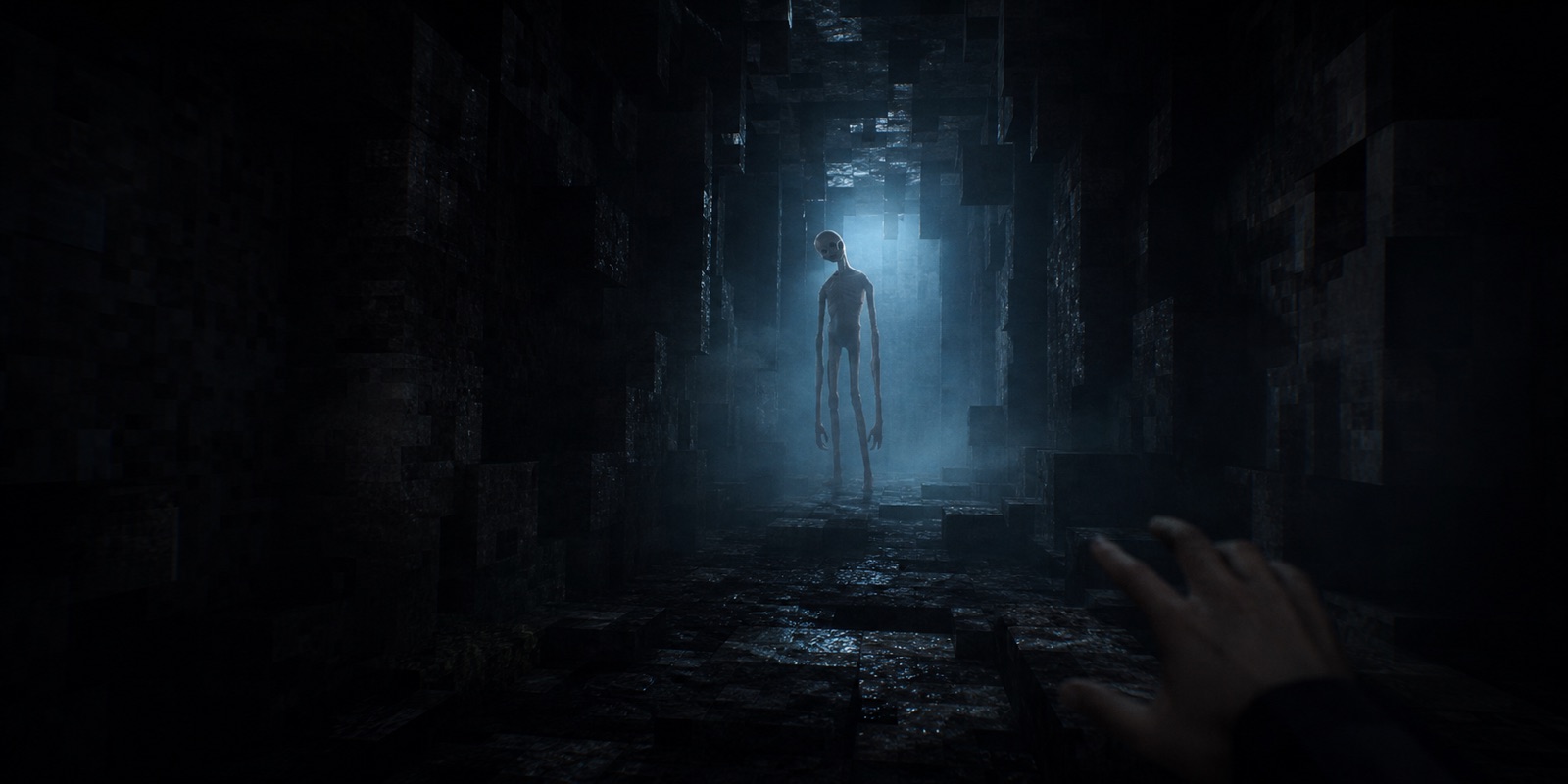
Verity horror works because the danger arrives in the shape of assistance. Minecraft players are trained to recognize zombies, skeletons, darkness, and exposed terrain as threats. A bright companion that answers questions belongs on the safe side of that mental map. Once the player accepts its help, a pause, changed expression, or strangely personal answer can disturb an expectation that ordinary monsters never touch.
The design is less about a single frightening model than about misplaced trust. A helper can learn the route home, stand inside a protected base, and become part of the player's daily loop. Verity horror turns those comforting habits into evidence that the threat is already close. The player cannot solve the feeling merely by placing more torches or building a stronger wall.
Isolation gives the story room to breathe
Minecraft contains long stretches of quiet activity, which makes it a natural stage for slow suspense. Mining, sorting storage, and walking home create time for the player to notice a sound or absence. Verity horror can use that empty space without filling every minute with combat. The possibility of observation is enough to change how a familiar corridor feels.
Good pacing also preserves ambiguity. If every strange event immediately becomes an attack, the companion is simply another enemy with a trigger. When ordinary explanations remain possible, the player starts checking memory: was that block always missing, did the face change, or did the sound come from a cave? Uncertainty makes the audience collaborate with the story instead of waiting passively for a jumpscare.
The scripted series and playable projects
The character became widely associated with a produced Minecraft horror series by ThatMob. Edited storytelling can control camera position, dialogue, timing, performance, and custom effects. It should be approached as a crafted film, not as automatic proof that one downloadable build reproduces every scene. This distinction is essential when viewers search Verity horror expecting the video to function like a product demonstration.
Playable adaptations now exist on recognized project pages. Verity JE by VarmiteYT documents a Java implementation, while Verity BE by Undertaletalelover and Verity - Bedrock Edition by PnTMC document separate Bedrock interpretations. Each publisher states its own features and setup. The existence of those projects does not make every fan upload canonical or technically equivalent.
AI language changes the kind of fear
A conversational system can make Verity horror feel less predictable than fixed dialogue. The unsettling effect comes from apparent attention: the character responds to the player instead of repeating a standard sound. Yet an AI label is not evidence of unlimited memory, private knowledge, or consciousness. A project can only be evaluated through its documented model, prompts, stored context, network service, and implementation.
Players should treat privacy as part of the experience design. If a project requires a remote service or API key, read the maintainer's documentation, understand what text is transmitted, and never reveal secrets in chat. Remote availability and costs can change. A local model may reduce network sharing but can demand more hardware and setup. Neither route should be romanticized as magic.
Preserving the mystery without spreading fiction
Fans can discuss Verity horror as fiction while remaining exact about software. Name the original storyteller and the adaptation developer separately. Link to the full project page, not a reposted file. Say that a feature is documented only when the current description or changelog supports it. Do not invent versions, compatibility, multiplayer support, or behavior from an edited clip.
Honest Verity horror discussion does not weaken the atmosphere. It gives creators proper credit and lets players choose the experience they actually want. The story can remain mysterious inside the world while installation remains boringly clear outside it: verify the owner, Project ID, edition, version, loader, expected file, and setup instructions before opening anything.
Set expectations without spoiling or exaggerating
A careful verity mod minecraft horror preview separates confirmed elements from audience interpretation. Confirmed public-page elements include the assistant, its animated box, a demon entity, darkness changes, and AI-related setup. Claims such as reading private files, learning a player's real fears, permanently controlling a computer, or reproducing every moment from a film should not be assumed. A Minecraft mod operates within its installed software environment, and an alarming social clip is not technical documentation.
Expect atmospheric darkness, unsettling presentation, possible sudden threats, and an assistant-to-danger theme. Do not promise a specific scare count or difficulty curve. Horror response is personal: abrupt audio, distorted faces, darkness, pursuit imagery, and unpredictable dialogue may be uncomfortable for some players. If you are sensitive to those elements, watch the official project media with sound low, play in daylight, or skip the experience. Guardians should review the current page and media before a younger player installs it.